
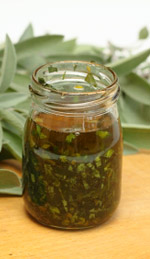
 It’s hard to identify the age of nature’s medicine chest. Plants and trees have been healing aches and pains as well as wounds and scratches for centuries. Oils from the plant kingdom have balanced the central nervous system, healed the intestinal system, and stimulated the circulatory and respiratory systems long before people wrote about those accomplishments. Sage oil is one of these ancient oils that has assisted humans in healing and living well for many thousands of years!
The miraculous properties of sage oil, along with other essential oils, were verbally passed down from generation to generation around the Mediterranean region. Through the years Dioscorides, Galen, and Pliny all recommended sage as a diuretic, and for its hemostatic, emmenagogue, and tonic properties.
Before the centuries were marked with double digits, monks kept sage in their medicine cabinets. The Greeks called it sphakos, and Romans called it salvia. Charlemagne recommended it for cultivation in France decades later, and the British started using it in food recipes before there was a Britain.
Carl Linnaeus, the Swedish botanist, was the first Western scientist to describe sage in 1753. Salvia officinalis was the official name in those days, but it has been classified under many names since then. Long before this, though, sage was used to ward off evil spirits, cure snakebites, increase women’s fertility, and as a local anesthetic.
During the Middle Ages, sage and three other herbs were combined and used to fight symptoms of the plague. These days sage is grown and harvested all over Europe and other continents. Sage oil and leaves are used in culinary applications as well as for healing a variety of ailments, including excess perspiration.
The National Institute of Herbalists sent out a survey to its members in the UK and asked them to comment on their experiences with sage oil. Forty-nine people responded. Forty-seven of them used sage oil in to assist with hot flashes and night sweats, and for its effect on memory and brain functions (which are enhanced even more when combined with rosemary and/or labdanum oil).
In an unpublished German study, it was found that sage relieved excessive perspiration by over 70%. The study was based on a group of people suffering from bouts of heavy sweating brought on by nervous tension and excitement. For more information on using sage oil to treat excessive sweating, check out this video!
Mouth, throat, and gastrointestinal issues such mouth ulcers, infected gums, dental abscesses, and throat infections are also treated with sage oil. The essential oil of sage is used in aromatherapy to treat salmonella and Escherichia coli as well as yeast infections like Candida albicans and filamentous fungi.
Modern 21st-century folks call sage oil ‘the ancient remedy with modern day effectiveness.’ This is a very apt description indeed! Sage oil is immensely beneficial for such a wide range of ailments that it truly is a must have in any medicine cabinet, ancient or modern.
Good information indeed, however, sage oil, sage the herb, and sage essential oil are three very different dosages of sage. Sage essential oil, as far as I know, is not recommended in aromatherapy due to the amounts of thujone and camphor…there are much safer choices of essential oils as the concentration is much greater than, say, the herb or an herbel infusion. Clary sage or petigrain works just as well for excessive perspiration, without the toxicity.
If the essential oil is pure, therapeutic grade, there are no chemicals or synthetics in it and so nature has created a beautiful harmonic relationship between all the molecules. This means that they balance each other so that one molecule does not do harm because the others work in synergy with it.
Thujone and camphor are part of the ‘synergistic’ constituents that naturally exist within sage oil. There is no such thing as ‘therapeutic’ grade essential oils as there are no standards by which to grade the constituents of an oil, deeming it therapeutic grade. There are very beautiful, harmonic essential oils that are quite toxic and should be avoided in aromatherapy. My guess is that you are a Young Living or DoTerra rep…very sad that you did not recognize that thujone and camphor are not synthetic and both constituents are naturally occurring at different %s in several different plants and eo’s…and can be quite toxic.
Tiffany Tucker Mladinich wow! You told her. THANK YOU for telling ME too! I had no idea.
very interesting stuff
Do you use it topically?
blended with a carrier oil or lotion, I would use it topically
Fresh sage leaves steeped in olive oil for a long enough time to extract the essence from the sage into the oil and then you can blend that oil with soften shea butter. Excellent.
wow… sage oil a bad girl!
Fascinating article.
I usually burn bunches and bundles of dried sage leaves in my home as a natural incense. It keeps peace and tranquility on your home. Or maybe it just gets every body stoned. lol. Jk. But yes a fantastic herb it is ! Burn it and use it for aroma therapy.